Robtronic Media
Do Not Rely on Organic Ecommerce Growth Alone
Why scaling stores should lead with paid distribution and use SEO and organic social media as support.
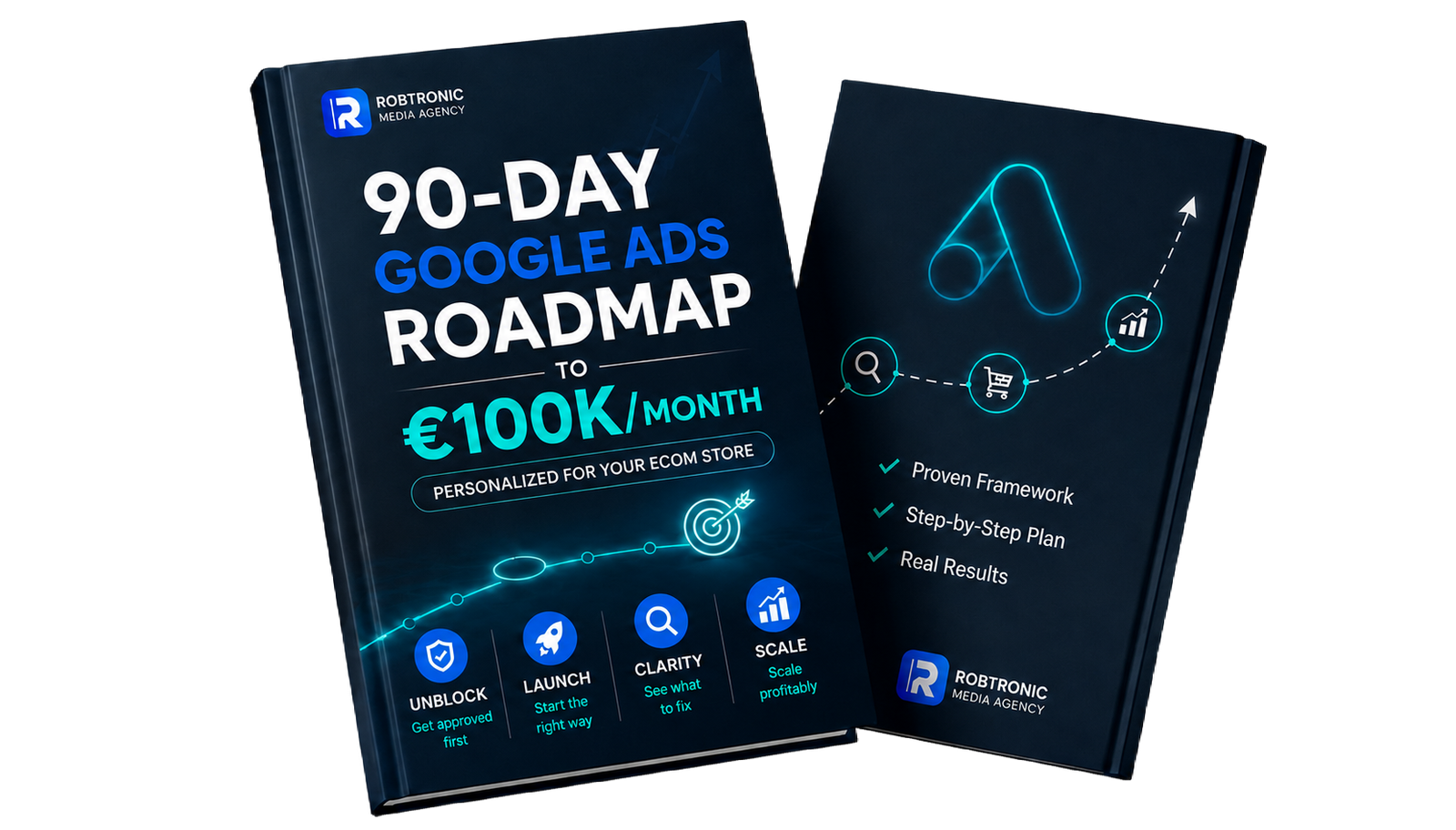
What’s stopping your store from reaching €100K/month?
Get your personalized 90-day roadmap. See what to fix first and where your biggest growth opportunity is.
Show Me My Path to €100K/Month →Do Not Rely on Organic Ecommerce Growth Alone
Organic ecommerce growth can produce long-term visibility, but I wouldn’t use it as the sole engine for scaling your store. When growth speed matters, lead with paid distribution and keep SEO and organic social media working alongside it.
Does it make sense to start organically? You can, but organic visibility usually takes sustained time and effort to build. My recommendation is to reach potential customers through paid placements while continuing to develop the unpaid channels you can maintain over time.
Quick Answer: Should You Rely on Organic Ecommerce Growth Alone?
Prioritize paid placements on Google or social media when you need to scale, then use SEO and organic social as supporting channels. Organic ecommerce growth can work, but relying on it alone usually demands sustained time and effort before meaningful reach develops. Paid distribution can accelerate visibility, although it doesn’t guarantee profitable growth or mean organic activity will automatically improve your ads.
Organic-Only, Paid-Led and Combined Ecommerce Growth
Organic ecommerce growth means growing store traffic and sales through unpaid channels such as SEO and organic social media. Paid placements are advertising inventory purchased on Google or social networks to reach potential customers faster.
| Growth model | Speed and effort | Best role |
|---|---|---|
| Organic only | Requires sustained time and effort before meaningful reach | Long-term visibility when speed is not the main priority |
| Paid led | Can accelerate distribution but requires ad spend and active management | Primary lever when a store needs faster reach |
| Paid plus organic | Uses paid distribution while maintaining unpaid activity | My preferred model for scaling without abandoning organic channels |
Why Organic SEO and Social Media Can Be Too Slow for Scaling
The problem isn’t that organic marketing has no value. The problem is relying on it when your store needs more reach now.
SEO often involves creating useful pages and waiting for search visibility to develop. Organic social media often requires consistent content before enough of the right people see it. Both routes can take substantial time and effort before they produce meaningful reach.
Paid placements let you purchase distribution on the same types of platforms. That can put your products in front of potential customers faster, but faster reach is not the same as profitable growth. Your offer, margins, campaign structure and active management still matter.
Should You Combine Paid and Organic Ecommerce Marketing?
Yes. Use paid placements together with organic activity, but give each channel a clear job.
Paid distribution should be your primary reach lever when speed matters. SEO can build search visibility around products, categories and useful buying information. Organic social media can keep your brand active and give potential customers more content to explore.
Keep the relationship accurate: platforms don’t uniformly suppress organic content just to make you pay, and posting organically doesn’t automatically increase paid-ad reach or performance. Paid and organic activity can support the same growth plan without assuming that one will mechanically improve the other.
If you’re deciding how to divide your advertising spend, start with using Google Ads on a budget. If both search and social fit your buying journey, read the guide to combining Google Ads and Facebook Ads.
Prioritize Paid Placements, Then Use Organic Activity as Support
My first move is to prioritize paid placements on Google or a suitable social platform, then maintain a realistic organic schedule instead of waiting for unpaid reach to become your entire acquisition system.
As a practical application of that principle, use this short decision process:
- Define the immediate need. Decide whether you need faster product discovery, more high-intent search traffic or broader social reach.
- Choose paid distribution first. Use Google or a suitable social platform to reach potential customers rather than waiting exclusively for organic exposure.
- Give organic channels a supporting role. Continue useful SEO work and social content at a level your team can sustain.
- Manage growth with control. Don’t treat purchased visibility as proof that a campaign is profitable.
Don’t only rely on organic placements. The risk is spending all your available time producing SEO pages and social posts while your store waits for meaningful reach. Keep building those assets, but don’t make them carry the full scaling target when paid distribution is available.
This doesn’t make paid advertising the correct choice for every store in every situation. It means a scaling owner should compare speed, effort, spend and management requirements instead of choosing organic activity only because it has no direct media fee.
For the paid side, follow a profit-first ecommerce scaling system rather than increasing spend simply because more reach is available.
Source Video: Does It Make Sense to Grow Your Ecom Store Organically?
Source video
Watch Robin’s organic-versus-paid ecommerce lesson
The video explains why I prefer paid-led distribution supported by ongoing organic activity.
Watch the Source VideoSource and editorial scope
This article is based on a YouTube lesson by Robin Tesselaar of Robtronic Media and expands the lesson into a practical ecommerce Google Ads guide. The decision process and channel-role guidance are practical applications of the video’s principle. Robin’s seven-year reference describes his experience when the video was recorded.
Make Organic Ecommerce Growth a Supporting Layer
When scaling is the priority, don’t wait for organic ecommerce growth to do the whole job. Start with suitable paid placements, manage them carefully and keep SEO and organic social media building in support.
Free scaling roadmap
Find Your Biggest Growth Leak and Scale With Control
Sign up first, and you’ll be routed to the roadmap that fits your store. Use it to assess your next step and plan a more controlled paid-led approach to growth.
Sign Up for My Scale RoadmapNot Subscribed yet?
Join My Free E-Commerce Knowledge Center to Boost Your Online Store's Sales & Profits.
- Free Knowledge for Guarenteed More Sales & Profits
- Incl. Checklists, E-books, Templates, Tutorials, 75+ Video’s, Special Discounts E-Commerce Software and many more
- 100% Free & Direct Access
- 5+ Years E-Com Experience
What’s stopping your store from reaching €100K/month?
Get your personalized 90-day roadmap. See what to fix first and where your biggest growth opportunity is.
Show Me My Path to €100K/Month →Get Your Personalized 90-Day Google Ads Roadmap to €100K/month
Answer 5 quick questions and see the next moves your e-commerce store needs to grow with Google Ads.
Know what to fix first. Stop guessing. Get a clear next-step plan to grow with Google Ads without killing your profit.
Free. Personalized for your store. Takes 2 minutes.
See what is holding your store back
Get your exact next steps
Built from 220+ e-commerce stores
Done for you Ads Management
Ready to scale your revenue & profits using Google Ads?
Curious what that could mean for you? Book a call using the button below.