
Robtronic Media
Check Your Dropshipping Unit Economics Before Scaling
Test whether a product can absorb advertising costs and refunds before you increase ad spend.
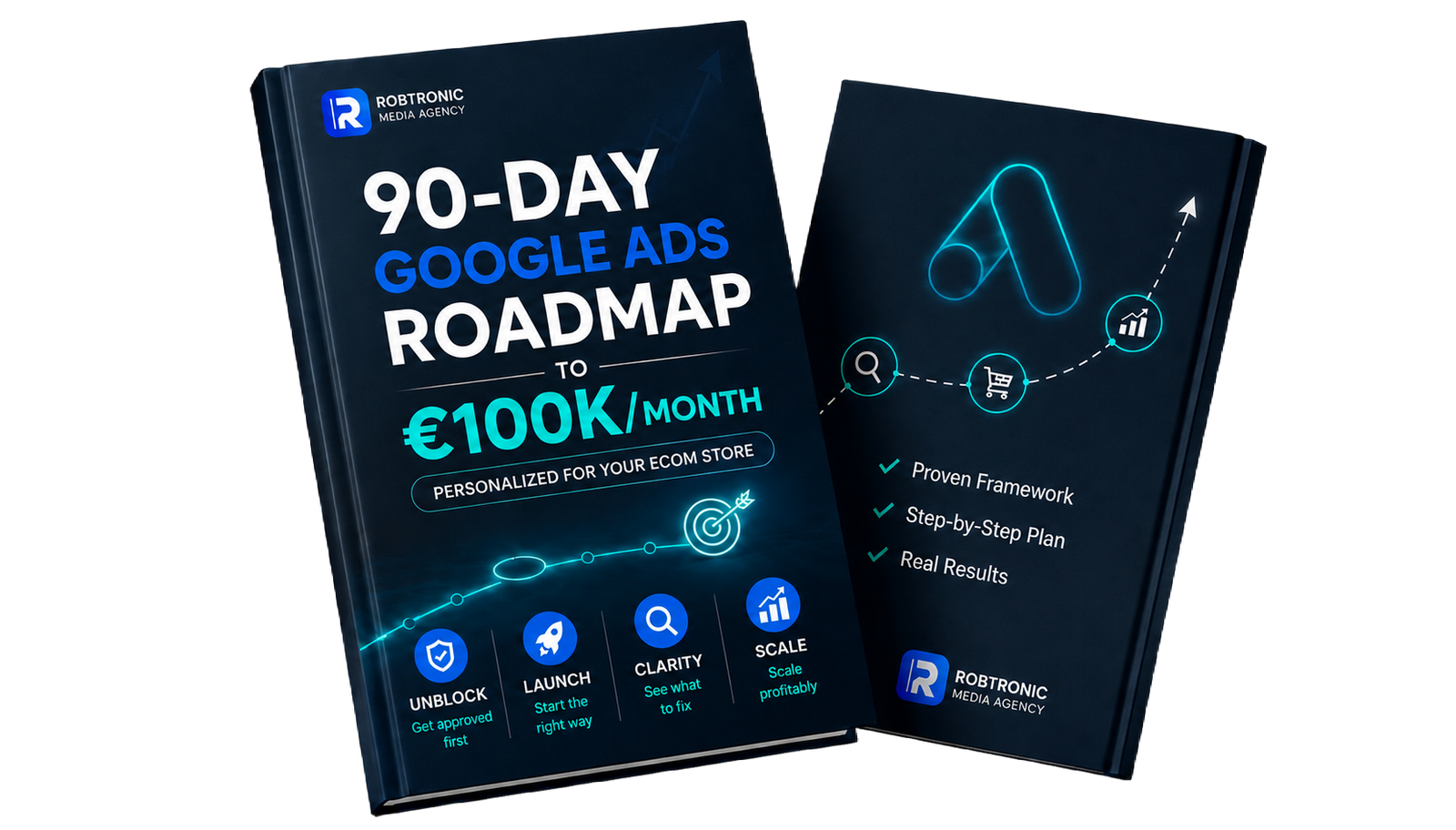
What’s stopping your store from reaching €100K/month?
Get your personalized 90-day roadmap. See what to fix first and where your biggest growth opportunity is.
Show Me My Path to €100K/Month →Check Your Dropshipping Unit Economics Before Scaling
Check your dropshipping unit economics before you increase ad spend. A product can look like a winner while its margin is still too thin to absorb advertising costs and refunds.
That was the lesson from my first winning product. It had around €20 in margin, but when I scaled and a few refunds arrived, the profit disappeared. The sales were not the problem. I did not have the right unit economics underneath them.
Quick Answer: Can Your Dropshipping Unit Economics Support Scaling?
Write down each product’s selling price, buying price and variable costs before increasing ad spend. Then estimate how refunds and customer acquisition cost affect the contribution margin left per order. A product that looks like a winner can lose money as it scales when that margin is too thin. Treat my €30 figure as context from my experience, not a universal advertising threshold.
Can This Dropshipping Product Absorb Scaling Costs?
Use the symptoms below to find the first number you need to check. Do not react to rising sales alone. Diagnose what each order contributes after its variable costs.
| What you see | Likely issue | First check |
|---|---|---|
| Sales arrive but little profit remains | Contribution margin is too thin | Subtract buying price and variable costs from the selling price |
| A few refunds erase earlier profit | Refund impact was not allowed for | Estimate how refunds change retained margin per order |
| Revenue rises while profit falls | Acquisition cost no longer fits the margin | Compare customer acquisition cost with contribution margin |
| The product looks like an early winner | Initial sales hide weak unit economics | Recalculate each order before increasing ad spend |
How to Calculate Dropshipping Unit Economics for One Product
Unit economics measure the revenue and variable costs associated with selling one product. Start with three direct questions: What will be my selling price? What will be my buying price? How much margin do I actually have?
Contribution margin is the amount left from a sale after variable costs, before fixed overhead. To see what is available for advertising and refund impact, start with this calculation:
Selling price − buying price − other non-advertising variable costs = margin available before advertising and refund impact
Use actual numbers for one product rather than your store’s total revenue. Store-level revenue can hide a product that produces sales without leaving enough money to fund customer acquisition.
If you need a structured sheet, you can calculate your e-commerce profit before making the next budget decision.
Add Refunds and Customer Acquisition Costs Before Scaling
The first margin calculation is not the finish line. You still need to test what remains after customer acquisition cost and the financial effect of refunds.
Customer acquisition cost is what you spend to acquire a customer. Compare that cost with the margin available before advertising. If acquisition consumes most of the margin, changes in costs or refunds can move the product from profitable to unprofitable.
Refunds also change the money retained from your sales. Use your own order, cost and refund records to estimate that effect rather than assuming every completed checkout will keep its original margin.
The mistake I want you to avoid is calling a product scalable because the first sales look promising. Recalculate the economics with the costs that appear during scaling, then decide whether the product has room for more spend.
Why an Early Winning Product Can Lose Money at Scale
My first winning product had around €20 in margin. It looked successful at the start, but scaling and a few refunds eliminated the profit. The underlying problem was that the available margin could not absorb what happened next.
That is the difference between a product that generates orders and one with room for controlled growth. More revenue does not automatically leave you with more profit when additional orders also carry acquisition costs and refund exposure.
Before raising your budget, check the contribution from each order again. You can also review why winning dropshipping products fail without assuming that early demand has already proved profitability.
Do You Need €30 in Margin Before Advertising?
No single margin figure guarantees that a product can advertise profitably. In the video, I described €30 as a threshold in the context of a lesson from my early e-commerce experience, which began in 2019. It should not be treated as a universal rule for every product, country, store or advertising platform.
The useful lesson is to calculate what remains after variable costs, the expected effect of refunds and customer acquisition cost. Your viable number depends on those inputs.
My first move before increasing ad spend
- Write down the selling price.
- Subtract the buying price and other variable costs.
- Estimate how refunds affect the money retained per order.
- Compare the remaining contribution margin with customer acquisition cost.
- Increase spend only when the numbers show room to absorb those costs.
Once those numbers are visible, use a profit-first Google Ads scaling system to connect budget decisions to retained profit rather than revenue alone.
Source Video: The One Thing I Wish I Knew Earlier About Shopify Dropshipping
Source video
Robin’s lesson on unit economics
Watch the original short about the product with around €20 in margin, the effect of scaling and refunds, and the lesson Robin took from that experience.
Watch the source video on YouTubeSource and editorial scope
This article is based on a YouTube lesson by Robin Tesselaar of Robtronic Media and expands the lesson into a practical e-commerce Google Ads guide. The calculation, checklist and diagnostic table are practical applications of the principle. Robin’s early experience and €30 figure remain context, not universal benchmarks.
Scale with control
Check Your Dropshipping Unit Economics Before You Scale
Sign up first, then you will be routed to the right roadmap for checking your store economics and choosing your next scaling step.
Sign Up for My Scale RoadmapNot Subscribed yet?
Join My Free E-Commerce Knowledge Center to Boost Your Online Store's Sales & Profits.
- Free Knowledge for Guarenteed More Sales & Profits
- Incl. Checklists, E-books, Templates, Tutorials, 75+ Video’s, Special Discounts E-Commerce Software and many more
- 100% Free & Direct Access
- 5+ Years E-Com Experience
What’s stopping your store from reaching €100K/month?
Get your personalized 90-day roadmap. See what to fix first and where your biggest growth opportunity is.
Show Me My Path to €100K/Month →Get Your Personalized 90-Day Google Ads Roadmap to €100K/month
Answer 5 quick questions and see the next moves your e-commerce store needs to grow with Google Ads.
Know what to fix first. Stop guessing. Get a clear next-step plan to grow with Google Ads without killing your profit.
Free. Personalized for your store. Takes 2 minutes.
See what is holding your store back
Get your exact next steps
Built from 220+ e-commerce stores
Done for you Ads Management
Ready to scale your revenue & profits using Google Ads?
Curious what that could mean for you? Book a call using the button below.