Robtronic Media

Google Ads for Ecommerce: How We Added €315K in 3 Months

This supplement brand was already selling through Meta Ads. But the owner was tired of relying on one channel. He wanted Google Ads as a second source of profitable orders, without learning the platform or spending hours inside another dashboard. We started from zero. Three months later, the account had generated about €315,000 in tracked revenue, 4,260 orders and a reported 5.1 ROAS. This case study shows the Google Ads for ecommerce setup behind those results.

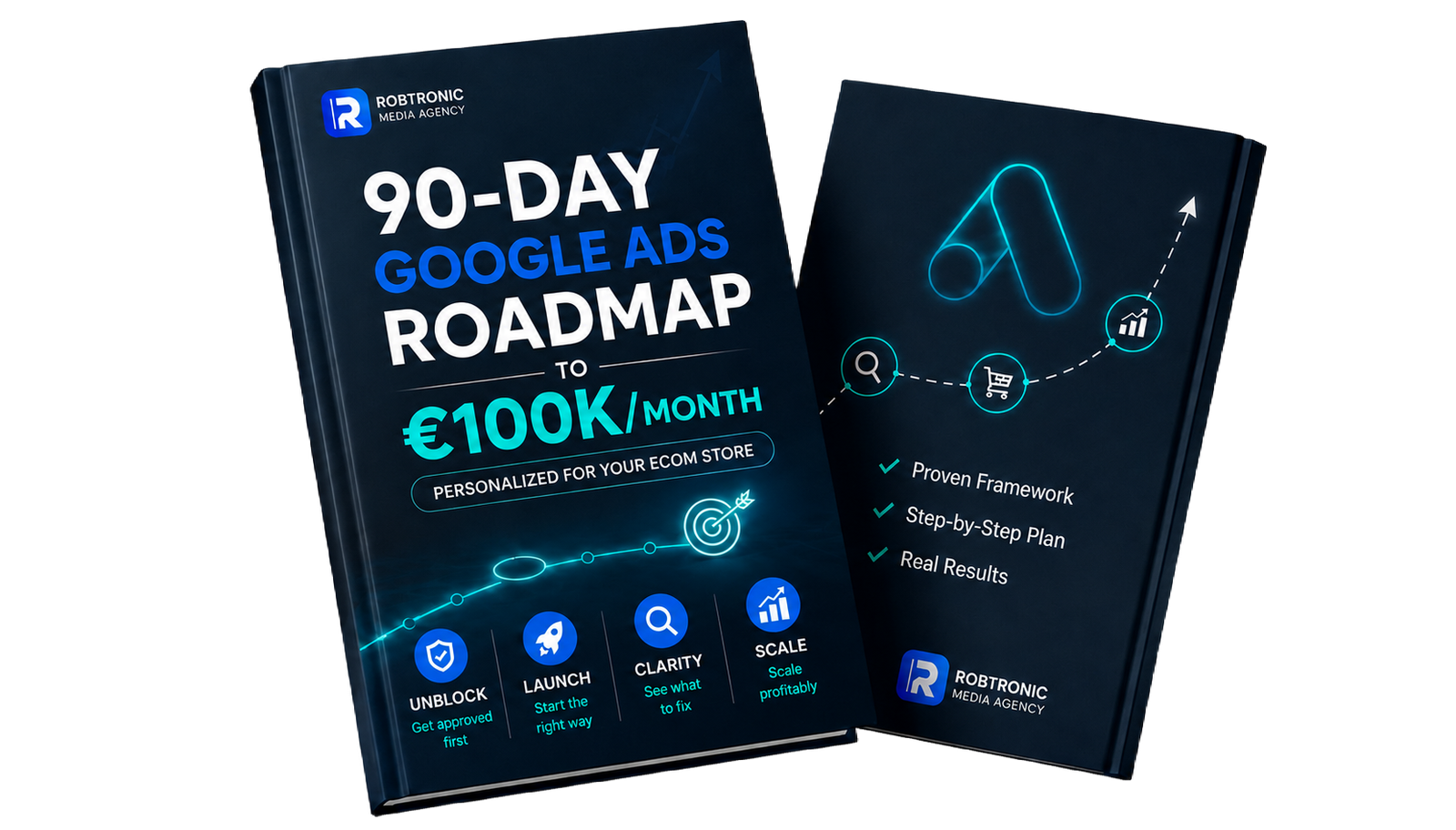
What’s stopping your store from reaching €100K/month?

Get your personalized 90-day roadmap. See what to fix first and where your biggest growth opportunity is.

Show Me My Path to €100K/Month →

Quick Answer. Can Google Ads Become a Second Channel Beside Meta?

Yes, when the store already has proven demand and the foundation is clean. In this case, we first fixed tracking, built the Merchant Center setup, improved the product titles and separated brand traffic from cold campaigns. That gave us cleaner data and more control over profit.

Important: Google did not replace Meta. It became a second channel that captured buyers searching for the brand, products and category.

Case study snapshot

From Zero Google Ads Experience to a Profitable Second Channel

Revenue

€315K

Orders

4,260

ROAS

5.1

Starting budget

€75/day

The client name and exact products remain private. The revenue and spend numbers are rounded. The reported ROAS comes from the account data used in the case study.

The Starting Point. Strong Meta Ads, Zero Google Ads

The brand was dependent on Meta

The store already knew how to sell through Meta Ads. That was a strong signal. It showed that the offer worked and people wanted the products.

But most paid growth came from one platform. When Meta performance moved, the owner felt it straight away. He wanted another channel that could support revenue and reduce the pressure on Meta.

The owner did not want to learn Google Ads

The owner was already focused on stock, operations, new products, the team and the wider growth plan. Learning Google Ads from scratch was not the best use of his time.

He wanted us to handle the full setup and management. He only needed the numbers that helped him make business decisions.

Profit mattered more than a large revenue screenshot

The average order value was around €70. The website conversion rate was about 2.1%. The store also had a stock lead time of roughly 60 days.

That meant we could not look at ROAS alone. We also had to protect cash flow and make sure the store could fulfil the extra demand.

Why Google Ads Became the Second Channel

Google reaches people when they start searching

Meta can create interest. Google can capture part of that demand when someone later searches for the product, category, problem or brand name.

That is why Google Ads and Meta Ads should not always be seen as competitors. They can support different moments in the same buying journey.

Brand search protects demand created elsewhere

A person may see a Meta ad and search for the brand later. A separate brand Search campaign gives the store more control over the ad, landing page, budget and reporting.

Without that setup, competitors, marketplaces or other search results can appear when someone is already looking for you.

A second channel spreads risk

A second channel does not remove risk. It spreads it.

The goal was not to move every euro away from Meta. It was to build a second profit channel that could grow beside it. For a deeper comparison, read Google Ads vs Facebook Ads for e-commerce.

The Results. €315K Revenue, 4,260 Orders and a 5.1 ROAS

We started in March with a daily budget of €75. Over the first three months, the account produced the following reported results:

Metric Result Why it mattered
Tracked revenue About €315,000 Google became a serious second revenue source
Ad spend About €60,000 The account had enough data to make real scaling decisions
Orders 4,260 Google added meaningful order volume
Reported ROAS 5.1 Every €1 in ad spend returned about €5.10 in tracked revenue
Average CPA range About €12 to €17 The acquisition cost stayed well below the average order value

Data note: The revenue and spend numbers are rounded, so a manual calculation may not match the exact dashboard ROAS. Add the original account screenshots with the visible date range before publishing.

Why the 1.35 Break-Even ROAS Changed the Scaling Decision

The account had a large margin above break-even

The store’s reported break-even ROAS was 1.35. That means every €1 in ad spend needed to return at least €1.35 in tracked revenue under the client’s cost model.

The Netherlands cold campaign reached about 4.5 ROAS. Belgium reached about 4.3. The brand campaign reached 25.8. On paper, all three were above the stated profit target.

Brand and cold results were kept separate

A high brand ROAS can make the full account look stronger than its new-customer campaigns really are. That is why we did not mix brand demand with cold acquisition.

The owner could see which campaigns captured existing brand demand and which campaigns found new customers in the Netherlands and Belgium.

Stock was the real scaling limit

The campaigns had room to grow, but the products took about 60 days to restock. Scaling too fast could create a cash or inventory problem.

This is an important lesson. A campaign can be profitable and still be unsafe to scale. The ad account is only one part of the business.

The Google Ads Foundation We Built First

The results did not come from increasing budgets on day one. We first built a clean foundation around four areas:

Step 1

Accurate purchase tracking

So campaign decisions were based on useful order and revenue data.

Step 2

A healthy Merchant Center

So approved products could run without avoidable feed or policy issues.

Step 3

Buyer-focused product titles

So Google had clearer product data to match with relevant searches.

Step 4

Clear campaign roles

So brand, cold traffic and each country could be judged on the right goal.

Step 1. Fix Tracking Before Spending More

Why purchase tracking came first

Google Ads needs useful purchase data to learn which clicks and campaigns lead to orders. If purchases are missing, duplicated or sent with the wrong value, the account can optimize toward the wrong result.

Before increasing spend, we checked that:

  • The purchase event fired after a real completed order.
  • Revenue values used the correct currency.
  • Transaction IDs were passed correctly.
  • One Shopify order was not counted twice.
  • Test orders appeared in the expected platforms.
  • Differences between Shopify, Google Ads and the tracking tool were understood.

The account optimized for purchases, not soft actions

Page views, add-to-cart events and checkout starts can help with diagnosis. But the real business goal is a completed order with the right value.

That is why purchase data stayed central. The client did not need more activity inside Google Ads. He needed profitable sales.

TrackBee helped create a clearer signal

The setup used TrackBee to support Shopify purchase tracking. The case reports tracking accuracy close to 95% based on Robtronic’s experience with the tool.

That figure is not a promise for every store. The bigger lesson is that tracking was tested before budget was scaled. For a full walkthrough, read Google Ads conversion tracking for Shopify.

Step 2. Build a Clean Merchant Center Foundation

Supplements need extra checks

Supplement products can face more policy and approval checks than many standard retail products. Claims, ingredients, product data, landing pages and target countries all need attention.

That made Merchant Center more than a feed connection. It became a core part of the account foundation.

What we checked before launch

  • Product approval status
  • Ingredients and product claims
  • Price and availability
  • Shipping and returns information
  • Contact and business details
  • Landing-page consistency
  • Feed warnings, errors and missing attributes

Merchant Center health stayed part of weekly management

Approval on day one does not mean the account stays healthy forever. Price mismatches, availability changes, feed errors and policy warnings can appear later.

We kept checking Merchant Center before small issues could turn into lost traffic or disapproved products.

Step 3. Optimize Product Titles for Buyer Intent

Make the product clear to Google and the buyer

A creative product name may look good on the website, but it does not always explain what the product is. The Shopping feed needs clear and factual product data.

We enriched the product titles with details buyers were more likely to search for, such as:

  • Product type
  • Main factual attribute
  • Size or quantity
  • Form or variant
  • Brand name

A simple title structure

Template

Product type + main attribute + quantity + brand

Less clear: Daily Balance Formula

Clearer example: Magnesium Glycinate Capsules, 120 Count, Brand Name

The example above is a template, not the client’s real product title. The goal is clarity. Do not add claims or attributes the product does not have.

Clearer titles can help Google understand the product and match it with more relevant searches. They also give the buyer more useful information before the click.

Want Google as your second channel?

Build the Foundation Before You Scale the Budget

Robtronic handles the tracking, Merchant Center, product data, campaign structure and weekly decisions. You stay focused on the store.

View Google Ads Management
Not Subscribed yet?

Join My Free E-Commerce Knowledge Center to Boost Your Online Store's Sales & Profits.

  • Free Knowledge for Guarenteed More Sales & Profits
  • Incl. Checklists, E-books, Templates, Tutorials, 75+ Video’s, Special Discounts E-Commerce Software and many more
  • 100% Free & Direct Access
  • 5+ Years E-Com Experience

What’s stopping your store from reaching €100K/month?

Get your personalized 90-day roadmap. See what to fix first and where your biggest growth opportunity is.

Show Me My Path to €100K/Month →

Part 2. Campaigns, reporting and scaling

Step 4. Split Cold Campaigns, Brand Search and Country Scaling

Once the foundation was ready, each campaign received a clear role. This made the account easier to manage and stopped strong brand results from hiding weaker cold performance.

Campaign role Reported result Main purpose
Netherlands cold campaign 4.5 ROAS Find new buyers in the main market
Belgium cold campaign 4.3 ROAS Test and grow a second market
Brand Search campaign 25.8 ROAS and about 600 conversions Capture people already searching for the brand

Netherlands cold campaign

The Netherlands was the main market. The cold campaign reportedly generated around 1,750 orders at a 4.5 ROAS.

This result was judged against the client’s 1.35 break-even ROAS. We also looked at order volume, CPA, product performance and stock before increasing the budget.

Belgium cold campaign

The Belgium campaign reportedly generated around 1,011 orders at a 4.3 ROAS.

Belgium was not treated as a blind copy of the Netherlands. Language, shipping, pricing, product approval and conversion rate still needed to work for that market.

Brand Search campaign

The brand campaign reportedly generated about 600 conversions at a 25.8 ROAS. Around €1,766 in spend returned about €45,000 in tracked revenue.

That performance was helped by demand created through the brand’s wider marketing, including Meta Ads. People already knew the name and searched for it on Google.

The campaign still mattered because it gave the store control over the ad message, destination and reporting. It also reduced the risk of competitors capturing a high-intent brand search.

How Weekly Reporting Kept the Owner Out of Google Ads

The owner needed decisions, not more data

The Google Ads interface can be overwhelming. This owner had no interest in becoming a media buyer. He wanted to know if the channel was making money, where growth came from and what might block the next step.

We used a simple KPI dashboard and two weekly Slack updates to keep the account clear.

The five numbers that mattered each week

Spend

How much was invested?

Revenue

How much tracked revenue came back?

Orders

How many purchases were recorded?

CPA

What did each tracked order cost?

ROAS

How did return compare with break-even?

Monday performance update

The Monday Slack update covered the previous week. It showed spend, revenue, orders, CPA, ROAS and the main changes made inside the account.

The update ended with the next action. This stopped reporting from becoming a list of numbers without a decision.

Weekly quality control

A second update covered quality control. We checked the website, Merchant Center and account from Google’s point of view.

That helped us spot risks before they became a larger problem. The owner stayed informed without needing to check every setting.

The Dashboard Also Showed Which Products Were Winning

Top-level account ROAS is useful, but it does not show where the result comes from. The dashboard also broke performance down by campaign and product.

That helped answer three practical questions:

  1. Which products generated the most orders?
  2. Which products could absorb more budget?
  3. Which product ideas should the brand explore next?

The goal was simple: give the owner a clear view of what was working without asking him to live inside Google Ads.

What Comes Next. Scaling the Netherlands, Belgium and Europe

The next target is €300K per month

The client wants to reach about €300,000 in monthly revenue across the Netherlands and Belgium. That target now needs to be linked to stock, cash flow, contribution margin and fulfilment capacity.

A large revenue goal is useful only when operations can support it.

The winning setup can be tested in new countries

The next roadmap also includes other European markets. But the current setup should not be copied blindly.

Before opening a new country, we need to confirm:

  1. Product eligibility and Merchant Center approval
  2. Local language and landing pages
  3. Shipping times and return conditions
  4. Price, currency and local conversion rate
  5. Tracking and country-level reporting
  6. A clear budget and break-even target

Brand protection must grow with the business

As the brand enters more countries, more people may search for its name. Competitors can also become more active.

Brand traffic should stay separate from cold acquisition in every market. This keeps reporting honest and protects the demand the brand already created.

Checklist. How to Copy This Google Ads for Ecommerce Setup Safely

Tracking

  • Calculate your real break-even ROAS.
  • Test the purchase conversion.
  • Check revenue value and currency.
  • Send transaction IDs.
  • Remove duplicate tracking.
  • Record known platform differences.

Merchant Center

  • Check approved and disapproved products.
  • Review product claims and policy risks.
  • Match price and availability.
  • Publish clear shipping and returns.
  • Fix feed warnings and errors.
  • Confirm each target country is eligible.

Campaigns

  • Separate brand and cold traffic.
  • Use a clear budget for each market.
  • Keep the first structure simple.
  • Use the correct conversion goal.
  • Review product performance.
  • Scale only when profit and stock allow it.

Weekly reporting

  • Spend
  • Revenue
  • Orders
  • CPA and ROAS
  • Brand vs cold results
  • One action, one risk and one next step

Simple Troubleshooting Rules

When this happens Check this first
Shopify shows orders, but Google Ads shows nonePurchase tag, conversion action, value, currency and connection
Google Ads shows more purchases than ShopifyDuplicate tags, repeated events and selected conversion actions
A supplement is disapprovedProduct, ingredients, claims, landing page, country and policy status
Brand ROAS is high, but cold ROAS is weakDo not use total account ROAS to justify cold scaling
ROAS is above break-even, but stock is lowLimit spend until the stock position is safe
A new country stays below targetPrice, shipping, language, approvals, feed quality and conversion rate

Common Mistakes That Make Scaling Harder

Mistake: Increasing spend before tracking is stable.

Fix: Stop budget increases until purchase data is useful.

Mistake: Mixing brand and cold results.

Fix: Separate the campaigns or reporting views.

Mistake: Using another store’s ROAS target.

Fix: Calculate your own break-even point.

Mistake: Copying one country setup into every market.

Fix: Check language, shipping, price, policy and demand first.

Mistake: Reporting many numbers without a decision.

Fix: End every weekly update with the action, risk and next step.

When to Outsource Ecommerce Google Ads Management

Your products already sell, but you have no time

Google Ads management can make sense when another channel already proves demand, but Google keeps getting delayed because the founder is doing everything.

The owner does not need to become a media buyer. But someone must own tracking, Merchant Center, campaign structure, testing and reporting.

You want profit, not just more ad spend

A serious ecommerce Google Ads agency should ask about margin, break-even ROAS, stock, best sellers, market plans, cash flow and fulfilment.

The goal is not to spend more. The goal is to build a channel that can grow within the store’s real limits.

You need an operator, not another dashboard

The owner should know what changed, why it changed, what happened and what comes next.

They should not need to study the full account each week. This case worked because the owner kept his focus on the business while we handled Google Ads for ecommerce.

Frequently Asked Questions

Is Google Ads a good second channel beside Meta Ads?

It can be. Meta can introduce the product. Google can reach people when they later search for the category, product or brand. The channels should be measured separately and together.

How much budget do you need to start Google Ads for ecommerce?

There is no universal amount. This case started at €75 per day. Your starting budget should reflect expected CPA, margin, conversion rate, stock and the amount you can test without hurting cash flow.

Should supplement brands use Shopping or Performance Max?

It depends on product eligibility, data and the level of control needed. The Merchant Center feed, tracking and approved products must be ready first. Read Performance Max vs Standard Shopping for a deeper comparison.

Why is conversion tracking important before scaling?

Google Ads uses conversion data to understand which interactions lead to valuable actions. If purchases, values or transaction IDs are wrong, reporting and automated bidding can make poor decisions.

Should I run a brand name campaign?

A separate brand campaign can make reporting clearer and give you more control over the ad and landing page. But a high brand ROAS should not be used as proof that cold acquisition is equally strong.

What is a good ROAS for ecommerce Google Ads?

A good ROAS is one that clears your own profit target. A 3 ROAS may be strong for one store and unprofitable for another. Start with contribution margin and break-even ROAS.

Can Google Ads work when the owner has no Google Ads knowledge?

Yes. The owner does not need to manage the account. They should still understand the main numbers and approve the business limits around profit, cash and stock.

Done-for-you Google Ads management

Ready to Add Google as a Second Profit Channel?

We handle the tracking, Merchant Center, campaign setup, weekly management and reporting. You keep your focus on the products, stock and growth of the business.

Explore Google Ads Management

Built for established ecommerce stores that want Google managed as a serious second channel.
Free Personalized Google Ads Roadmap

Get Your Personalized 90-Day Google Ads Roadmap to €100K/month

Answer 5 quick questions and see the next moves your e-commerce store needs to grow with Google Ads.

Know what to fix first. Stop guessing. Get a clear next-step plan to grow with Google Ads without killing your profit.

🚀 Get My Personalized Roadmap

Free. Personalized for your store. Takes 2 minutes.

See what is holding your store back

Get your exact next steps

Built from 220+ e-commerce stores

Done for you Ads Management

Ready to scale your revenue & profits using Google Ads?

If you want to scale your Google Ads to the next level while maintaining a solid profit margin and growing in a controlled way, we can help you break through your revenue plateau with our Google Ads scaling system, proven to work for more than 225+ e-commerce stores.

Curious what that could mean for you? Book a call using the button below.

Want More Sales From Google Ads Without Guessing?

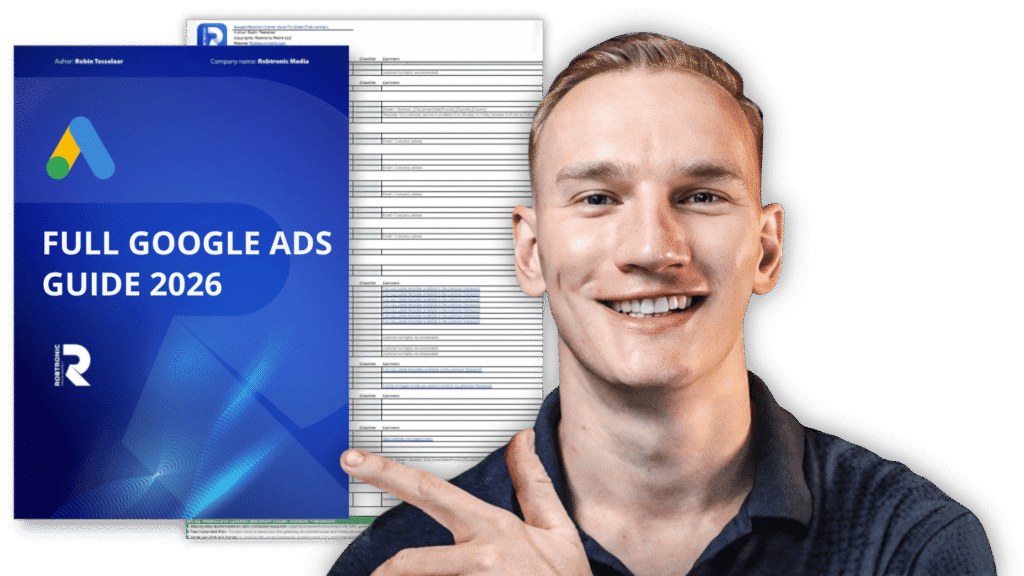
Get the free Google Ads Guide for e-commerce. Learn how to set up, improve, and scale your google ads campaigns step by step.

Full Google Ads Guide

Want More Sales From Google Ads Without Guessing?

Get the free Google Ads Guide for e-commerce. Learn how to set up, improve, and scale your campaigns step by step.

Full Google Ads Guide